Detective Burton
The AxDetective Burton is the state CID investigator pursuing the killings of Herbert Everly and Kane Asche, and later the disappearance of Hauck Exman. His friendly manner and talk of sailing make his first visit to Burke Devore’s home seem almost companionable; the questions he asks, however, connect the victims through a shared job application and, eventually, a government contract. To Burke, Burton’s ordinary investigative steps expose how near the police may be to recognizing a pattern—and how much his own safety has depended on chance.
Identity and Introduction
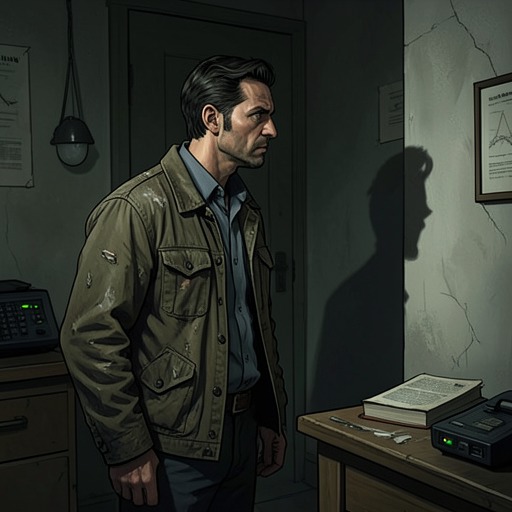
Burton first appears at the Devore family home, where he pauses over a Winslow Homer print. He smiles toward the picture and explains that he grew up on boats because his father is a great sailor. When he introduces himself as Detective Burton of the state CID, he extends his hand and asks whether he is interrupting. The polite greeting and easy conversation establish a relaxed social surface for an encounter that Burke experiences as threatening.
The painting gives Burton and Burke a possible point of connection, but not a real one. Burton asks whether Burke is a sailor; Burke says he is not, adding that his wife loved the picture. He regrets that he cannot claim the shared interest, because he hopes it might create a bond. Burton’s questions soon turn from the print to a notebook, and the shift makes clear that sociability is also part of the interview’s setting, not evidence that the visit is casual.
The First Inquiry
Burton asks Burke whether he knows Herbert Everly, then Kane Asche. Burke recognizes the danger immediately, but answers as though the names mean nothing to him. Burton explains that both men had been among four applicants called for a second interview, and that both were found shot to death. Ballistics has established that the same gun killed them. When Burke asks whether they worked together, Burton says there is no known connection between the two except that they applied for the same job.
Burton’s account makes the employment link central without claiming that it has solved the murders. He tells Burke that investigators are canvassing anyone connected to either victim because the link, if one exists, may lie in their past rather than with the hiring company. The employer’s phone call set the inquiry in motion, but Burton is searching broadly for people, places, or occasions that might connect applicants in the same industry. His example of a trade fair conveys the investigative problem: the candidates’ shared job application is an obvious point of contact, but it may not be the only one.
Burton treats Burke as one of those possible contacts, not as an accused man. He notes that Burke was among the people interviewed for the position, and Burke says he received no callback. The distinction matters to the investigation and to Burke’s performance of innocence: he can acknowledge the application while presenting himself as someone who failed to get the job, with no further connection to the victims. Burton’s questions do not establish guilt, but they force Burke to maintain that account under scrutiny.
Reassurance and the Near Miss
At the end of the first visit, Burton gives Burke his card and asks him to call if he remembers anything or if anything unusual happens in the neighborhood. Burke nervously jokes about being shot. Burton replies that the killings seem to number two and that he does not expect a third; he tells Burke he thinks he is safe. The reassurance is sincere as far as Burton knows, but it lands with grim irony because Burke has considered killing a third job-seeking manager, Garrett Blackstone.
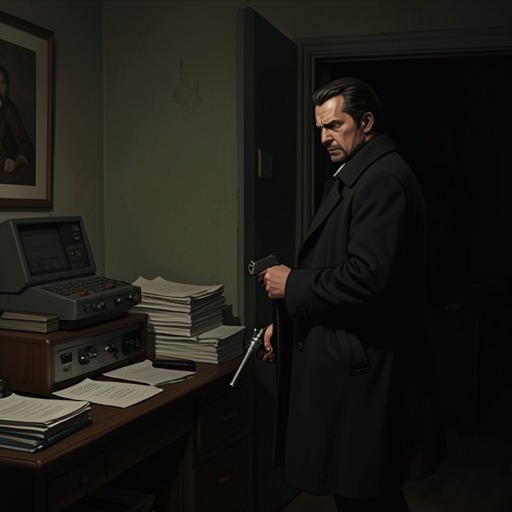
After Burton leaves, Burke tells Marjorie about the visit and returns to his office shaking. He reasons that two killings might still be dismissed as coincidence, whereas a third job-hunting paper-mill manager shot with the same gun would make that explanation much harder to sustain. Had Burke found Blackstone and shot him during one of his visits that week, he believes Burton and the other detectives would have recognized the pattern and kept searching until they found him. Burton’s ballistics finding has also exposed a failure in Burke’s own thinking: Burke had assumed his old, unrecorded gun was anonymous, overlooking the possibility that investigators could connect separate killings through the bullets.
A Renewed Visit and a Wider Pattern
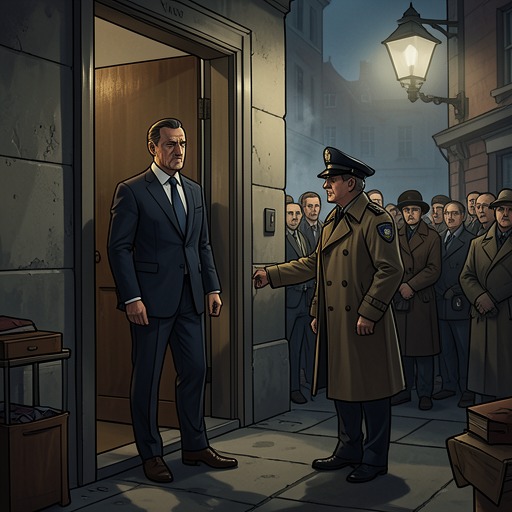
When Burton returns, Burke is dressing for a job interview arranged after a call from John Carver. Marjorie, who has shared Burke’s hope that the job is real, tells him the detective is there. Burton greets Burke warmly, but says he has another name and photograph to show him. He asks about Hauck Exman. Burke denies recognizing him, then looks at the formal photograph Burton provides and describes Exman as tough-looking before asking who he is. Once again, Burton’s ordinary interview puts Burke in the position of concealing recognition while appearing cooperative.
Burton now explains that investigators have linked Everly and Asche through a government contract from four or five years earlier for a kind of special paper. The Treasury Department was involved, and representatives of the bidding companies went to Washington to speak with its officials. Burke’s company did not bid on the contract, Burton says, so Burke might otherwise have met all three men in Washington. This gives the investigation a more specific historical route between the victims and Exman, even though it does not make Burke a participant in that earlier meeting.
Burton reports that Exman has disappeared and that detectives are talking to both of his girlfriends. Singapore was the place Exman talked about most, but he did not take his passport; Burton allows that he might have another one and says the police will track him down sooner or later. The uncertainty distinguishes this line of inquiry from the ballistic link between Everly and Asche: investigators have a destination to consider, but not proof that Exman went there. Burke again says he has not been much help, while Burton notes that the company’s absence from the contract bid explains why Burke would not have encountered the three men in Washington.
Investigative Role and Narrative Tension
Burton’s importance lies in the cumulative pressure of his questions. He does not arrive with a complete theory or openly accuse Burke; he gathers connections, tests names, checks photographs, and follows what he can establish. His friendly exchanges about the Homer print and sailing make the interviews feel socially ordinary, while the notebook, shared-gun evidence, and increasingly specific links reveal the inquiry tightening around the circumstances of Burke’s crimes.
The contrast is sharpest between Burton’s confidence that Burke is safe and Burke’s knowledge of the danger a third murder would have created. The detective’s reassurance rests on the evidence as he understands it: two victims, a possible coincidence, and no established third killing. Burke hears the contingency beneath it. Burton’s investigation therefore functions both as a search for the murderer and as a measure of how narrowly Burke has escaped exposure. By the second visit, Burton has widened the case from a shared job application to an earlier contract and a missing man, but the encounters still leave him unaware that the person answering his questions is the killer he is trying to find.